In July, I hiked the roughly 9.5-mile Stone Door loop in Savage Gulf with just one 0.5-liter water bottle. I ran out around mile five with several miles still ahead of me. It wasn’t dangerous, but it was uncomfortable and completely preventable. That mistake is the reason water is first on my Tennessee summer day-hike checklist.
Most of the hikes I write about on Ridgeline Field Notes are day hikes in Tennessee, and summer ones specifically have a way of making every gap in your kit visible. The heat, the humidity, the bugs, the afternoon storms that materialize without warning, it all adds up fast when you’ve underprepared. I’ve made enough mistakes on enough trails to have a clear sense of what actually matters.
This isn’t a comprehensive gear manual. It’s the day hike packing list I’d actually put together before a summer hike in Tennessee, based on real experiences on real trails.
Full day packing list
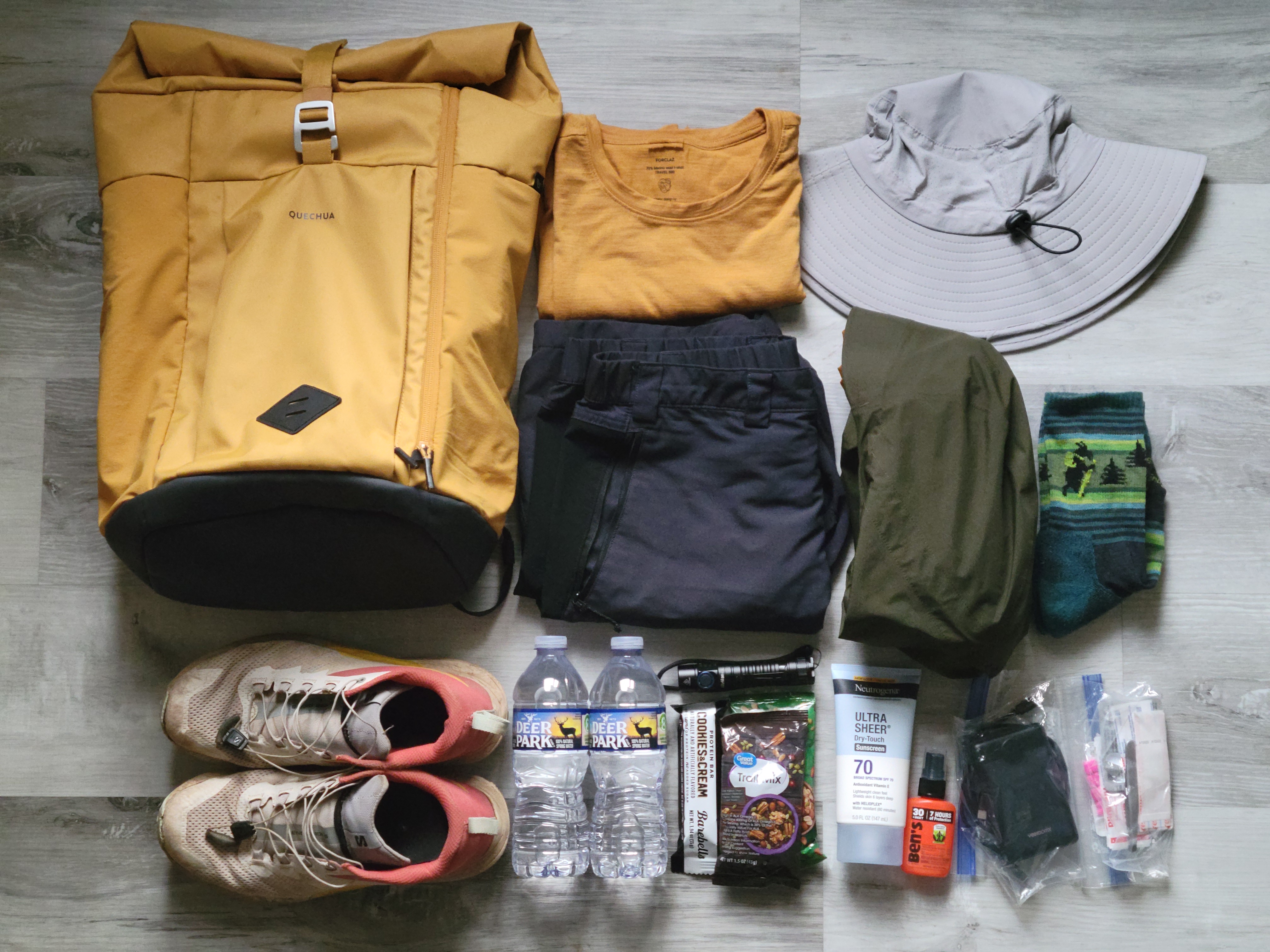
Here’s what the full day-hike packing checklist looks like:
- Water (scaled to distance and temperature)
- Snacks or lunch
- Trail shoes or trail runners with grip
- Moisture-wicking shirt, pants or shorts, and socks
- Hat
- Sunscreen
- Bug repellent
- Packable rain jacket, rain poncho or compact umbrella
- Offline map downloaded before leaving (plus paper map/compass for remote routes)
- Phone and power bank
- Headlamp or small flashlight
- Compact first-aid kit with tweezers
- Dry clothes in the car for after
Day Hike Packing List: Core Kit for Tennessee Summers
For most summer day hikes here, I don’t overthink the core kit. Water, snacks, a hat, sunglasses, sunscreen, bug repellent, trail shoes, a charged phone, and a power bank go in first. From there, I adjust based on distance, heat, terrain, and whether the route has creek crossings, exposed overlooks, or a long climb back out.
The two items that earn their place despite feeling optional are a flashlight and a compact first-aid kit. Day hikes run long more often than expected. A slow pace, a missed turn, or just stopping longer than planned at a waterfall can push your return time past sunset. A headlamp or flashlight weighs almost nothing and completely eliminates that problem. The first-aid kit covers blisters, cuts, and bug-related issues: adhesive bandages, antiseptic wipes, ibuprofen, antihistamine, tweezers, and a small roll of medical tape.
Tweezers pull double duty for ticks. Ticks are common enough on Tennessee summer trails that finding one after a hike isn’t unusual, so the tweezers aren’t a luxury item.
Water and Food: What Nine Miles with One Bottle Taught Me
How much water to carry
The Stone Door loop in July heat taught me that water planning is essential. The trail isn’t technically difficult, but its canyon terrain around the Big Creek Rim stretches long and stays very humid through Tennessee summers. I now follow a simple rule: about 0.5 liters per hour in moderate conditions, up to 1 liter per hour when it’s hot and humid. For an 8 – 10 mile day hike, that means carrying at least 2 – 3 liters and starting early to avoid the midday heat.
What to eat on the trail
Food is less dramatic but still matters more than people plan for. On anything under three miles in mild conditions, a snack and water are enough, though even short hikes can run long, so pack a little extra if it’s hot or you’re with a slow group. On moderate 4 – 6 mile hikes, bring something that works as a real meal if the hike runs long. A sandwich, nuts, jerky, and fruit cover it without any complexity. The goal is not bonking on the back half of a trail that’s already draining your legs.
What to Wear: The Machine Falls Jeans Situation
At Machine Falls, I wore jeans on a humid July day and regretted it from the first step. Cotton holds sweat, gets heavy, and chafes, so now I stick to lightweight, moisture-wicking gear. Nothing technical or expensive required. The fabric just can’t be cotton. Add a hat as standard warm-weather gear.
Footwear matters especially near waterfall destinations, which make up a large share of popular Tennessee day hikes. Flat-soled shoes and sandals struggle on wet rock and exposed roots. Trail shoes or trail runners with actual grip handle those surfaces reliably. They don’t need to be heavy or high-cut, just a sole with traction.
Bugs, Rain, and Day Hike Safety Gear
Summer trails in Tennessee move through wooded terrain with tall grass and dense brush, so encountering bugs and ticks is expected. Bug repellent applied before the hike, longer sleeves through dense sections, and a tick check at the car after, that routine handles most of it. The tweezers in the first-aid kit take care of anything that attaches.
Tennessee summer afternoons can produce quick storms even when the morning starts clear. A packable rain jacket takes almost no space and eliminates a genuinely miserable outcome. Sunscreen matters more than most people plan for, especially on exposed ridges and open overlooks. Apply it before leaving the trailhead.
Cell service can be unreliable on Tennessee trails, especially in canyons, creek corridors, and more remote parts of state parks. Downloading an offline map before you leave, through AllTrails, or even just Google Maps, reduces the navigation gap without adding any weight. That said, a paper map and compass remain the most reliable backup if your phone fails or battery dies, so consider them part of your day hike safety gear on longer or more remote routes. A power bank keeps the phone running long enough to actually use it. In my experience, these are the two simplest upgrades most casual hikers skip.
How the Day Hike Packing List Changes Based on Distance
Under 3 miles
The kit gets lighter but never disappears. Water, grip footwear, a hat, and bug protection prevent the most common problems regardless of distance.
Moderate 4, 6 mile hikes
Add more water, real food, an offline map, and better clothing. The margin for error gets smaller when you’re farther from the trailhead.
Harder 8, 10 mile days
Carry 2 – 3 liters of water or more, additional food, a headlamp, and a rain layer. Start earlier than feels necessary to stay ahead of afternoon heat and storms.
A Solid Kit Is Just Honest Planning
A day hike packing list for a Tennessee summer doesn’t need to be complicated. It needs to be honest about the conditions: the heat, the humidity, the wet rocks, the ticks, and the afternoon storms that arrive without warning. Two hikes made that clearest for me. Running out of water on Stone Door and wearing jeans to Machine Falls both came down to small oversights that created real, avoidable discomfort.
Treat this daypack checklist as a starting point. Adjust it as you learn your own habits and the specific trails you hike most. The goal is leaving the trailhead with nothing critical missing, and coming back having actually enjoyed the day rather than survived it.
Leave a Reply